

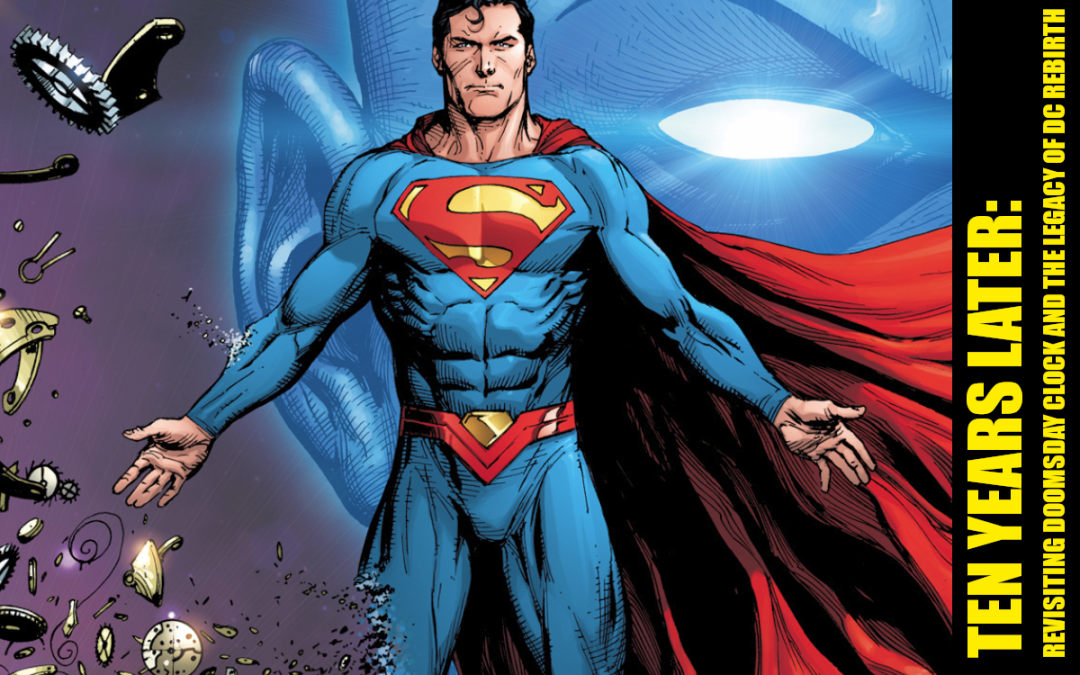
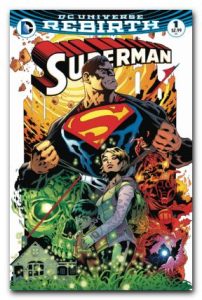
In 2016, I was almost done with comics. The spark I felt when I first got into the hobby had gone out. I didn’t see much reason to press forward. Then a book came out called DC Universe: Rebirth. Two years later, I got my first job at Graham Crackers Comics in St. Charles, and I’ve been here ever since. It’s amazing how quickly things can change with one good initiative, and with the Absolute Universe now fulfilling a similar role for a generation of new readers, I want to take a step back and reflect on Rebirth’s legacy, and what better way to do that than looking back at its biggest and most important event.
Few modern comics have inspired as much discussion as Doomsday Clock. Delayed, debated, and at times divisive, it was nothing if not ambitious. Both a sequel to Watchmen and a thematic culmination of DC Rebirth, it’s worth stepping back after all that’s happened at DC and the world at large, and asking a simple question: what was Doomsday Clock actually trying to do?
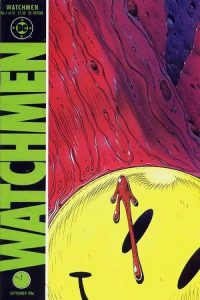
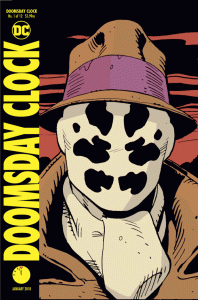 At its core, the series operates on two levels. On the surface, it is a crossover, bringing the world of Watchmen into direct contact with the DC Universe. But beneath that, there’s a more contemplative element. If Watchmen was an examination of how superheroes impacted real world culture, Doomsday Clock turns that lens inward, exploring how Watchmen itself reshaped the superhero genre.
For decades, Watchmen has cast a long shadow over comics. Its deconstruction of heroism, its skepticism of power, and its grounding in political and psychological realism gave comic books legitimacy as a medium, legitimacy that has been under constant scrutiny ever since. Doomsday Clock engages directly with that legacy. Rather than rejecting Watchmen outright, Doomsday Clock casts the original series as a turning point that led to a more cynical, fragmented vision of heroism, where aspiration took a back seat to angst and everything turned darker and edgier, trying to recreate Watchmen’s appeal and, more to the point, its enduring financial success.
In short: The 90s didn’t happen by accident.
This tension between deconstruction and reconstruction, between despair and hope, forms the thematic heart of both DC Rebirth and Doomsday Clock. Where Rebirth sought to reassert optimism and legacy as central pillars of the DC Universe, Doomsday Clock interrogates why those elements were lost in the first place, and what it means to bring them back. It used Doctor Manhattan as representative of writers and editors playing God for the sake of it, not considering the broader consequences of their actions until it’s far too late. Superman is the counterpoint: an enduring representative of aspirations and ideas which should outlast any one moment in time.
A man of steel, if you will. The confrontation between those forces forms the backbone of Doomsday Clock’s narrative.
 The series also operates within a broader cultural context, much like Watchmen before it. It reflects a cultural landscape marked by uncertainty, shifting narratives, and competing interpretations of truth. Its exploration of perception, influence, and the power of stories feels, if anything, more relevant now than it did at the time of its release. Rereading it for this article, I found myself looking at the reports and background materials in the book that show the situation escalating towards its conclusion and then shifting uncomfortably in my seat at how much of it became more than fiction in the last ten years.
 Of course, Doomsday Clock was not without its complications. Its publication delays disrupted momentum, and its place within DC continuity remains somewhat difficult to pin down as competing visions reshaped the publishing line. For some readers, the very premise of continuing the story of Watchmen remains a point of contention. And yet, even with those challenges, Doomsday Clock stands as a work of considerable ambition. It attempts something few comics do: to engage not only with characters and continuity, but with the history and evolution of the medium itself, and the role played by creatives in making or breaking something which, under ideal circumstances, should outlive them.
Ten years on, that ambition is perhaps easier to appreciate. Like Watchmen before it, Doomsday Clock does not demand consensus. It invites interpretation. It asks questions about what superheroes have been, what they became, and what they might still be.
And a decade later, those questions remain worth asking. For me, they’ll always be worth asking. And I hope new readers will have their own answers.
Absolutely fantastic write up. I recently read this for the first time, and I had the same experience, feeling uneasy about how certain pages felt more real than not. I can understand why it was so divisive, but I personally really enjoyed it.